Friday, January 22, 2010
This is Turkey! / Burası Türkiye!
Wednesday, January 20, 2010
Flowers on the Water / Suda Çiçekler
I've watched ebru being done many times; almost any traditional arts exhibition here will feature an ebru artist at work. The paints are dropped or spattered with special brushes and a stylus onto the surface of water which is thickened with a plant extract called tragacanth. The paints are mixed with varying amounts of gall, which controls how much they spread over the surface. It's all a complex balance of chemistry and technique; even the humidity and temperature can affect the outcome.
Mr. Yeşil was there, and had a pan set up for people to try it themselves. I watched him talk a woman through a basic tulip, and decided to try it myself. We'll come to that in a bit!
One flower that features prominently in ebru is the tulip. There are probably several reasons for this: Turkey is the homeland of many wild tulip species, the tulip mania that eventually spread to Holland began in Turkey, and the shape of tulip petals seems to cry out to be depicted in ebru.Mr. Yeşil, who is also a teacher of Ebru, has his own page devoted to the art of ebru, provided below, and courses are available.
So what of my own first attempt? I wanted to try the more abstract "battal" type. At first glance, it would seem to be easier, right? But it's not! Think of it this way - is it easier to paint a picture directly or try to do it by throwing the paint at the canvas? You tap the brush a little too hard on your finger and you get too much paint. Tap it too lightly and you get none. Hold your finger too stiff and the paint shoots beyond the place you're trying to apply it. Here is mine still in the tray:
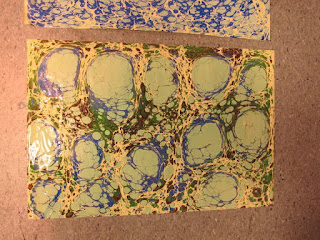
The final step is to carefully lay the paper over the surface and draw it off - why drawing it over the edge of the pan doesn't mar the paint I don't know... And I present to you, in living color, my ebru representation of... corn smut! It's a beginning...
Please visit Mr. Yeşil's page at http://www.dokusu.com and be sure to watch the videos of ebru in the process of creation! There is also an ebru gallery where you can see many fascinating examples of this unique Ottoman art form.
Türklere ebrunun ne olduğunu nasıl yapıldığını anlatmak biraz gereksiz olduğunu zannediyorum, benden çok daha iyi anlatan yerler var zaten! Bugün Taksim metrosundayken bir ebru sergisine rastgeldim ve ebru satıldığı çok yer gibi ziyaretçilere ebru yapmayı deneme imkanı da sunuluyordu. Ebru, uzun zamandır denemek istediğim birşey olduğu için sansı değerlendirdim, sonra biraz botanik bir açıdan ebru hakkında yazmaya esinlendim.
Batıda "paper marbling" olarak bilinen ebru, orada daha çok diğer objeleri süslemek kullanınan bir sanattır. Küçük çocuk olarak ilkokulumuzun kütüphanesinde dev bir sözlük vardı, kapalıyken sayfa uclarındaki desenlere hayran kalmıştım. Nasıl yapıldığını hiç düşünemiyordum, suyun yüzeyinde olacağını nereden tahmin edeyim ki?
Botanik açısından ebruyu sadece bir süs sanati değil, Türk insanının doğal dünyayı nasıl algılayıp betimlediğini bir belgeleme olarak görüyorum. Botanik olarak ele alınan çiçekleri birebir yansıtmamasına rağmen (ki bu ya imkansız olurdu ya ebrunun imkanlarını ciddi bir şekilde sınırlandırırdı), çiçeklerin özünü ortaya çıkardığı kesindir. Ebruda görünen gelincik, lale veya çan çiçeği, doğaya herhangi bir botanik türüne tam benzemiyor fakat hemen hangi çiçek olduğunu anlıyoruz.
Çiçekleri birebir betimleyemediği halde, yine de bitki dünyasında belli gerçekleri de yansıtıyor ebru. Mesela ebruda sık sık ele alınan bir çiçek, laledir. Anadolu'da birçok yaban lale türleri olması yanısıra, özellikle Hollanda'da olmak üzere batılıların bir lale soğanı için aklı şaşırtacak para harcamaya teşvik eden "lale çılgınlığı"nın başlangıcı, Türkiye'nin Lale Devri'nde idi. Osmanlıda en gözde laleler ise, günümüzde artık çoktan kaybolmuş, yaprakları uzun ve sivri olan cinslerdi. Daha eski ve/veya geneleksel Osmanlı sanati örneklerinde betimlenen lalelerin büyük çoğunluğu, bu uzun ince yapraklı cinslerden esinlenmiş olduğu görülür.
Çok şükür, bu eski türleri yeniden hayata geçirilmeye çalışılıyor artık fakat şimdilik lale üretimi ve geliştirmesinin merkezi kuşkusuz Hollanda'dır. Her ilkbahar İstanbul'un caddelerine binbir renklerini katan lalelerin hemen hemen hepsi, Hollanda'da, uzaktan göreni etkileyip gözü kamaştırmak için geliştiren, uzun boylu geniş yapraklı cinslerdir. Bu da ebruda görülebilir artık. Hatta Fatih Yeşil ile Hüseyin Gülbaran'ın eserleri yer aldığı sergide "cennet kuşu" gibi Türkiye'ye ancak bu yüzyılda gelen, Osmanlıların hiç tanımadığı çiçekler bile gördüm. Ve gelecekte başka neler ebruya girecek diye sabırsızlıkla merak ediyorum! Ebru ustası Fatih Bey ayrıca dersler veriyor; hem dersler hem de ebru için daha ayrıntılı bilgi için http://www.dokusu.com web sitesine başvurabilirsiniz.
Benim ilk girişime gelince...çok sevdiğim, daha soyut olan "battal" ebru tarzının, çiçeklerden daha kolay olacağını sanmıştım. Meğer öyle değil! Neden mi? Normal resim düşünün, hangisi daha güzel bir sonuç verecek, bir fırça ile direkt boya uygulamak mı yoksa uzaktan fırlatmak mı? Ustanın elinde son derece kolay görünüyor tabii, fırçayı sol elin parmağına hafif vurarak suyun yüzeyine boya damlacıklarını dağıtıyor. Fakat! Az fazla hafif vurursanız hiç boya çıkmaz, biraz fazla sert ise çok fazla çıkar, sol elin parmağını fazla kasarsanız da boya istediğin yeri aşar. Benim ilk ebru örneğine gelince... çiçekten çok, mısırda çıkan bir mantar hastalığına benzedi! Bir başlangıç işte...
Monday, January 4, 2010
A New Endeavor: The New Daylilies!
Well, this title isn’t entirely accurate; it’s hard to find a gardener (at least in the U.S.) who hasn’t grown daylilies, if only the common orange ones (Hemerocallis fulva), and I've grown them too. They can often be found growing in huge stands across the American countryside; and since they are a sterile hybrid that produces no seed whatsoever, they did not seed in, but were planted in deliberately at some time or other. Where you see a lone stand with no surrounding buildings, chances are that there was once a home there. It’s such a vigorous and durable plant that it’s easy to see why it was popular among pioneer gardeners – and why it remains long after every last trace of the home has disappeared. My moth
er grew other daylilies in her Iowa City garden – there were some of a deep orange-almost-red shade, and a stand of tall clear yellow ones that, as I remember, had a very sweet pistil that I liked to pluck out and eat. In my Seattle garden I found one dwarf daylily languishing between the walk and the foundation and brought back to life, wondering what it would do. It turned out to be Hemericallis lilioasphodelus, commonly called “Lemon lily,” and with its small but substantial clear yellow blooms and delicious fragrance, it was one of my favorite plants.
Overall however, even though I’d seen some different daylilies in garden catalogs – whites, spiders, even pinks, they always seemed…“common,” for the lack of a better word, or maybe “unconvincing.” The reds seemed muddy, so were the much-hailed pinks…as if, despite their outward difference, they were really just aching to be dusty orange.
On my last trip to Seattle in November though, my old neighbor and fellow garden freak Skot (I'm not a sycophant but I really should be embarrassed to even compare myself to him!) showed me the daylily plants he had been bidding on. “Bidding on?” Yes– it turns out there is a truly devoted group of people who are crazy about daylilies and who are producing new hybrids that are so spectacular they’ll give tall bearded iris a run for their money. He was doing this bidding through the Daylily Exchange. http://www.daylily.com/ Just the image on their homepage is a hint at what’s to be found within. If you aren’t convinced, check out Bill’s Hemerocallis Page http://www.ofts.com/bill/daylily.html., and particularly the gallery at http://www.ofts.com/photo/gallery.html. (Thanks to Bill for generously allowing the use of his images!)
This for example, is no run-of-the-mill daylily!

To be honest, just like the new iris hybrids, the price of many of the newly-released daylily hybrids places them well beyond the reach of the average gardener, but in a year they become last year’s hybrids, and so on, and there are lots of wonderful things to be had for reasonable prices.
There is also the option of growing them from seed. Growing regular lilies (Lilium) from seed is a rather involved process often involving a double stratification, but daylilies are almost as easy as zinnias. People have several different approaches to sowing them but Skot takes his seed and puts it in the freezer for a couple weeks, after which it’s ready to sow whenever he wants. Sowing seed in the fall and growing through the winter under lights can often produce a bloom the first year, though the true character of the bloom will become clearer after the plant is better established. I have several of his seedlings growing in my garden now and have gotten blooms on two - one is a large clear yellow spider and the other is...well, orange, but a much richer and substantial orange than any old fulva and I'll let it keep growing.
An entire jargon has grown up around daylily breeding – UFOs, spiders, watermarks, shark’s teeth… And just as with bearded iris, there are now lots of reblooming daylily hybrids. But here the daylilies have a fascinating twist: the second flush of bloom often exhibits a color shift so striking that it’s hardly recognizable as the same variety. Another surprise in some of the new hybrids is the size; some of the spiders in particular have blooms of up to 15 or more inches across! Many of them are semi-evergreen as well, meaning they continue to provide substance when they are not in bloom in the form of their arching, strap-like leaves.
So if the thought of daylilies still conjures up images of invasive orange things, why not reconsider and try something really new this year? I'm already looking forward to the first blooms on the rest of the plants I planted last year, and knowing I have seed of some very high-falutin' plants here gives me even more to look forward to!
Saturday, January 2, 2010
Winter Blahs: The Antidote / Kış Sıkıntısının Panzehri

Hemen belirteyim ki bu blogu takip edenlerin bazılarının yaşadığı yerlere kıyaslarken, bahçeyle ilgili olarak “kış sıkıntısı” denilen şey için şikayet etmeye hiç ama hiç hakkım yok. Hâlâ arada bir çiçek açmaya çalışan Brugmansialarım var, Geranium macrorrhizum’um koyu pembe çiçeklerini yeni açmaya başladı, ve geçen yıl bulduğum kokulu siklamen saksısını kıvrık bembeyaz yapraklarıyla doldurmuş halde. Ayrıca evin içinde bir pabuç orkidesi mevsimdışı bir çiçek açmak üzere.
Yine de başıma geliyor…uzun, çok soğuk olmasa da gri günler ve toprağı sürekli kazılmaz halde tutan sürekli yağmurlu hava, bir ilgisizliğe yol açabilir. Ve tam bu esnada, kapitalizm gelip, ilk tohum katalogunun varışıyla günü kurtarıyor!
Seattle’dayken her yıl - Thompson and Morgan, Park Seed, Wayside Gardens ve birçok özel fidanlıktan gönderilen onbeş küsür katalog geliyordu. İstanbul’da o kadar almıyorum, ve gerçeğini söylemem gerekirse bahçe alışverişimin büyük çoğunluğunu artık internet üzerinde yapıyorum zaten. Fakat belki de ondandır ki, yağmurlu bir günde eve dönüp kapının yanında çiçeklerler süslü uzun ince bir katalogu bulmak beni daha da mutlu etti. Son derece orijinal şekliyle İngiltere’deki Chiltern Seeds katalogunu hiç bakmadan bile tanıyorum. Siz de Chiltern Online’den alışverişinizi yapabilirsiniz. Fakat internet ne kadar kolaylık sunarsa sunsun, yağmurlu bir günde rahat bir köşeye sığınıp gelişigüzel katalogu açıp, böyle bir açıklamaya rastgelmek, son derece eğlenceli:
953M £1.94 Papaver, bilinmeyen tür, 'Via Rotorua'
Bu bitki ile adı biraz açıklama gerektirir! Hepimiz bildiğimiz gibi Rotorua, Yeni Zelanda’da ve yine de belki hepimiz bildiğimiz gibi, söz konusu ülkede, Gelincik ailesine ait olan herhangi bir bitki bulunmamaktadır. Hikaye tam bir özgeçmiş gibi: İnsanlar Yeni Zelanda’ya göç ediyor, sevdikleri gelincik tohumunu da götürüyor, cinsini koruyup yetiştiriyorlar, yıllar geçiyor, tohumu İngiltere’ye gönderiyorlar, yazarın eşi İngiltere’de bitkileri yetişirken görüyor, biraz tohum istiyor. Sonuç: dibinde siyah bir beneği olan, ipekimsi mor/lila yapraklı 7 cmlık tek çiçekli, hoş bir gelincik.
Bunun gibi kesinlikle sipariş etmem gerekecek tohumlar içermesi yanı sıra, her katalogda yeni bir şey öğreniyorum, hatta hiç duymadığım yeni türler sunuyor, mesela:
899Q £1.98 Nicotiana glutinosa
Peru’dan gelen gri-yeşil yapraklı, çan şeklinde açık parlak gül pembe çiçekli bu gösterişli tütün türü sık sık sunulmamaktadır. Yetiştirilmesi kolay, arılar ve kelebekleriniz de ona bayılacak.
Tabi ki hep bu bitki muhabbeti, beni iyi günlerde bahçe olarak geçen araziyi düşündürerek, kıçımdan kalkıp her yere saran, bahçenin tek varlığı olmaya yüz tutan ebegümeci ile hodanı yolmaya teşvik ediyor. Yolacağım, ve hemen ardından yerine ballıbaba ile beyaz sarmaşık gelecek, fakat onlar, başka bir zaman için başka bir sorundur…
Herkese mutlu yıllar dilerim!
Sunday, September 27, 2009
The Last Squash Report! Son Kabak Raporu!
Here are some of the squash from the garden. The Rouge Vif d'Etampes produced nicely but with the exception of one, they didn't display the flat shape that is supposedly characteristic for the variety. They also were not nearly as tasteless as I've read, and one made a pretty decent soup.
Yemin ediyorum, ekin zamanı gelinceye kadar balkabaklar hakkında bir daha yazmayacağım! Belkı... Buyrun bu yılın balkabaklarından birkaç tanesi. Rouge Vif d'Etampes, çok güzel üretti fakat bir tanesi hariç o cinse özgü basık yayvan özelliğini göstermedi. Okuduğum kadar tatsız da çıkmadı, bir tanesinden çok lezzetli bir çorba yaptım.
Küçük gri Futsu'lar beni çok sevindirdi, çok fazla geç ekmeme rağmen yine çok ürettiler. Bir kaç tanesi yedim de zamanla tatlanacak mı diye bekleyeceğim. Fırında elma, biraz tarçın, muscat cevizi, tereyağla doldurup, biraz da portakal suyu ekleyrek pişirdim. Harika! Biraz farklı bir tadı var fakat her yerde okuduğum "fındık" tadını ben duyamadım. Reklam abartısı her halde.
The biggest disappointment was the Marina di Chioggia - I only got two! The reason is no mystery - a pack of dogs that came into the garden and decided to dig right where they were growing, snapping off two of the best runners. The quality is really nice though and I'll plant it again next year.
En büyük hayal kırıklığını, Marina di Chioggia ile yaşadım - sadece iki tane verdi! Sebebi ise mechul değil, bir köpek sürüsü bahçeme girip tam yetiştiği yerde kazarak en büyük iki sürgününü koparttı. Kaletesi son derece güzel ama, gelecek yıl da kesinlikle ekeceğim.
Aydın'lı ev arkadaşım da bir paket balkabağı tohumu getirdi. Satanlara göre o yörede en çok yetiştirilen cinsmiş. Tohum şirketi İstanbul'da ama... İstanbul'da benzer birşey gördüm de, burada en çok satılan cins "Adapazarı" veya "Kestane" denilen, büyük derin boğumlu gri cinstir. Aydın'da yetişen başka bir cins de var, büyük, oval şekli sığ çizgili, uçuk turuncu benekli açık yeşilimsi gri renkli bir tane. Ondan birkaç tohum elde etmek isterdim!
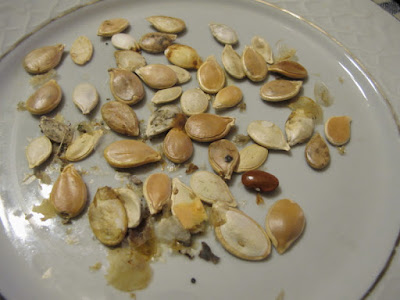
And the last pumpkin-related
Friday, August 7, 2009
Squash Update / Kabak Güncellemesi
Yep, I am! There aren't many other vegetables in the garden (okay, it's technically a fruit) where you plant a seed, watch it sprout and get established, then get to watch it bloom and begin growing with amazing speed, but have to watch through the entire summer to bring those fruits to maturity. Maybe corn would compare but it's still much more gradual and subtle. Tomatoes, okra, even melons, are harvested as they become ripe, with more constantly on the way; but with winter squash, your fruits set, and it's those same fruits you nurture over the months until it's finally time to harvest them. (Potatoes are another matter - you plant them, know they're growing down there, but you really don't know how many you'll get or how well they did until the moment of truth arrives. My potato harvest? Um...let's talk about squash!)
Above is a large and still-developing Rouge Vif D'Etampes fruit; it probably weighs about twelve pounds now and it hasn't even started to flatten out or turn color. Rouge Vif D'Etampes is interesting that way; whereas some squash make their eventual shape obvious even before the blooms are fertilized, this one starts out as a little yellow golf ball that doesn't show its eventual flat shape until fairly late in the game. Below is another one that is coloring up nicely. It is a bit smaller since it started forming earlier but I let several fruits form on its vine. I gave seeds to friends in Iznik as well, and there seems to be quite a bit of variation in shape; some of the fruits are deeply ribbed while others are smoother. This one is on the same plant as the one above; it grew round until just a few weeks ago when it began to flatten noticeably.
Below is another one on a different plant; all of this plant's squashes have a distinct green mottling that may fade as they mature.
Here's the same one just a couple weeks earlier. Though it had not begun to color up at all yet, it already had the green mottling.
The only "bad news" about Rouge Vif d'Etampes is the flavor reviews I've seen. The description was "delicious sweet flesh, perfect for pies and custards." Others, notably Amy Goldman, author of "The Compleat Squash," (more about her later) beg to differ. In her own words:
"This one coasts by on looks alone, being insipid and watery. It's enchanting, but I wouldn't cook with it."
Well, dang. We'll see. It was quite good when it was still yellow.
So what about Marina di Chioggia? Goldman gives it rave reviews, and even if its flavor were mediocre, I'd still be glad I planted it because it's an amazing looking thing. Unfortunately because of its situation, and the fact that a pack of dogs came into the garden are badly damaged the vines, I'll only get two of these for all my efforts. The larger of the two is just starting to develop the characteristic warts:
As a diversion from the squash, here's a picture of that nice Amaranth, "Hopi Red Dye," coming up among the leaves. There is a Rouge Vif d'Etampes lurking under the leaves though!
And then there's Futsu. I had something unusual happen with this one. Usually winter squash start blooming male, and after a succession of male flowers it finally opens the female flowers. My Futsus did exactlyl the opposite. As the fines took off, lots of male flowers developed at the nodes but they progressed very, very slowly. Meanwhile there were female flowers coming on quickly. I got two female flowers before I had any males. Since Futsu is a C. moschata, it technically can't cross with C. maxima (though it has been done artificially). But I thought "what the heck" and tried it anyway. The seeds may come out sterile but the fruits did set! Here's one of them - the picture's a little old and they're now much larger and a very dark green.
The Futsu plant is probably one of the most ornamental squash plant I've ever grown. I find the leaves beautiful with their generous white marbling, and the flowers are enormous! The mid-90s weather we have been having has seemed to put a bit of a damper on their fruit set but it's cooled a little now and some more females have started to grow instead of yellow and drop.
I've also finally found the place where gourds like to grow. Before I arrived my housemate had grown gourds in the upper garden but I've tried for 2 years in a row and despite manure and generous watering, I just can't get them to take off. I made a small arbor in the lower garden and planted a tiny ornamental bottle gourd with fruits only about 6" long at maturity. They really took off and are well on their way to to the top of the large plum tree next to them. They should be fun to decorate as Christmas or other ornaments. There are at least 14 out there and many more on the way.
If you are even remotely interested in squash, I can't say enough good things about the book "The Compleat Squash: A Passionate Grower's Guide to Pumpkins, Squashes and Gourds," by Amy Goldman. I knew there were lots of different kinds of squash but the illustrations in this book will have you drooling. She goes through the three major squash species and gives descriptions of both common and rare varieties' uses, table quality and origins. It's interesting how many heirloom varieties are stringy and unappetising; perhaps they grew them because they didn't have another variety available and were used to them. Other types, especially some of the large pumpkins, were grown as cattle feed. I'm already planning which new (to me) varieties I'll grow next year, and I'll definitely have to clear at least another 50 square yards of planting area!
And since you made it this far (well, I'm assuming), here is a compleat-ly squash-unlrelated picture: A bloom on my neighbor's giant white Datura just on the point of popping open. This is a plant with a strategy! The scent starts emerging from the flower long before they unfurl even to this point, and like hungry campers in the food line, they swarm around the flowers trying to find the entrance. Then the flower suddenly pops open, and it's dinner time!
Monday, August 3, 2009
A Botanic Garden in Istanbul! İstanbul'da bir Botanik Bahçesi!
Beş yaşı civarındayken en sevdiğim oyuncağım olan "super top"umu arıyordum. Koltukların arakasında, yatak odamda, koridorda, her yerde arıyordum ama nafile... Anneme gördün mü diye sorduğumda, gülümseyerek "evet, senin de çok yakında bulacağını zannediyorum" dedi. Aramaya devam ettim, yine bulamayınca anneme mızmız etmeye başlayınca sırıtarak "eline baksana" dedi. Oradaymış. Ve o küçük yaşta narkotik kullanmaya başladığımı zannetmeyin...! Sonuçta bazen çok aradığımız şeyler burnumuzun altındayken nedense farkına varmıyoruz. Nezahat Gökyiğit Botanik Bahçesi ise tam öyle bir vaka...İstanbul'da yaşadığım dokuz yıl boyunca otobüste bilmem kaç kez oradan geçmişim, ama varlığının bile farkına varmadım! Onların ayrıntılı web sitesinde burada yazdığım bütün bilgileri bulabildiğinize göre (hem de tembel olduğum için) bütün yazımı Türkçeye çevirmeyeceğim. Fakat hiç gitmediyseniz, hiç zaman kaybetmeden bu bahçeyi ziyaret etmenizi kesinlikle tavsiye ediyorum!
The garden is literally surrounded and bi-/tri-/quadrisected by freeway. And I have to admit that when I first heard there was a botanic garden there, I was not expecting anything very impressive; the entrance to the garden off the freeway did little to make me any more optimistic.
But the really amazing thing to me was that even though the garden was in some of the bleakest concrete high-rise sprawl of Istanbul, they had done a beautiful job of hiding it. The garden is divided by the highways into five "islands." From the main garden there is an overpass into a large picnic area which is also nicely planted. Another beautifully planned section is accessed via a drainage tunnel that runs underneath the highway. They have camouflaged this so well (see the first picture above) that you really have no idea the highway is there, and the walls of the tunnel on either side are outfitted with lighted panels explaining different aspects of plant evolution, adaptation and survival strategies.
In addi
The garden was first planted by Mr. Nihat Gökyiğit, not as a botanic garden at all, but rather with a double purpose: as a memororial to his wife Nezahat as well as an attempt to repair the land that had been degraded as a result of freeway construction. Over time it grew, and was declared a botanic garden in April 2003. It is now a member of the International Association of Botanic Gardens, and operates its own foundation.
Below is a spectacular Delphinium species native to the volcanic steppe soils of Anatolia.
The garden has a herbarium, propagation areas and classrooms with courses and workshops on urban gardening, composting and botanical illustration. It also has an ever growing botanical library, and puts out a quarterly gardening magazine, the only one I'm aware of in Turkey which is really devoted to plants instead of "expensive crap you can buy to stick in your garden!"
In addition to the two planted islands and the picnic area, there are two more islands which are not open to the public. The reason is that although they belong to the garden, the only access to them is by dashing across the busy freeway! One of them has been allowed to develop completely naturally, as a living museum of plant life in the Istanbul area.
You can find further photographs of the garden on its home page under the "Album" header in the English section, as well as on this site.