Tuesday, March 15, 2011

Cycling Liminalities - Eşiktelik Döngüsü

liminal  adj.
Of, relating to, or being an intermediate state, phase, or condition. In-between, transitional.

Nothing like an extended absence to let you know people are reading! Thanks to everyone who wrote and asked. Actually I've been wanting to write for almost two weeks, but the powers that be (actually, one power in this particular instance) made a quick decision that resulted in Blogger being blocked until yesterday. 

To be honest, I've hardly touched my garden, pulled a weed, potted up a cutting or done much of anything horticultural for several months. When things are in a state of change (it could be anything really; relationships, life goals, priorities), sometimes you need to turn inward rather than broadcasting to the world. In my case, some of the above apply, and in addition to that, the landlord popped by in November and had evidently decided that he wasn't getting enough money out of this apartment. So he wanted to raise our rent by 50%. Undoable as that is way beyond our budget, and also illegal, as rent increases may be made according to the annual inflation rate, which was 10% last year. As soon as we said we couldn't pay it, he immediately resorted to threats of calling the police, declaring an illegal occupation, changing locks, etc. He accused me of getting rid of his shed without his permission (absurd), called my garden a garbage dump, bla bla bla. He can't actually do anything for a variety of reasons, but it was so uncomfortable that I was seriously considering moving elsewhere, It was hard to stay focused on a garden I might very well be moving (again!). 


But now things seemed to have calmed down (including myself), and it looks like I'll at least be here for this summer, so I may as well enjoy it. And the fact that I neglected things doesn't mean that nothing was actually happening in the garden!


This has been a very strange winter. We didn't get a single hard freeze this year; the coldest day we've had so far was 4 days ago, where it hovered just around freezing for a couple days; yesterday and today were in the 60s. My Brugmansias have survived, and barring any more surprises, I should have double-high Brugs this year! 


For that matter, winter didn't even truly arrive until well into January. We had October and early November days so warm that it gave a whole new meaning to "Indian summer." A day or two after Christmas, missing the 75-degree days in Bahrain where I'd just been for ten days, I walked out to get some wood for the stove and noticed a flash of purple to my left. The earlier variety of I. germanica had been fooled and was in full bloom! I snapped this photo a few days late after it had been buffeted a little but it was still hanging in there. An odd sensation to smell iris in December...sort of like eating those Chilean grapes that hit the shelves in mid-winter. Right smell, but the context is all wrong.

Now the weather is warming, the garden is calling, and the weeds are snickering. Were snickering; last time I was back in the US, I splurged and got myself a nice Hori Hori. If you've never used this wonderful Japanese garden tool, you should definitely try it. Sturdy as all get-out, pointy enough to get between stones, and narrow to allow you to dig in deeply and selectively. I won't say it makes weeding fun, but it does make it satisfying!

Have a happy spring!

Blogculara bir tavsiye: Halkın blogunuzu takip edip etmediğini tespit etmek isterseniz, birkaç hafta eksik olun! Tüm yazıp soranlar sağolsun. Aslında yaklaşık iki hafta önce yazmak istiyordum fakat bilindiği gibi Blogger engellenmişti, eninde sonunda daha mantıklı zihinler hakim olmuş çok şükür. Neden yoktun diye sorasanız, bu kış (yaşadığımız mevsime gerçekten kış diyebilirsek eğer) kararsızlık/"eşiktelik" içinde geçti. Değişen ilişkiler, öncelikler, v.s...öyle zamanlarda en iyi şey biraz içe dönmektir. Bunlar yetmezse, aynı zamanda ev sahibimiz, daireden yeterli para almadığını algılayıp, %50lik bir zam yapmaya kalkmaz mı? Öyle birşey söz konusu değil tabii fakat öyle bir miktar veremediğimizi söyler söylemez adam hemen çıkarma, izinsiz işgal ihbarı, polis, kilitler değiştirme gibi tehditler etmeye başladı. Bahçeme de "çöplük" dedi... Bilinen sebeplerden kanunen birşey yapamıyor fakat sonuçta yaşadığım yerde kendimi rahat hissedebilmeye çok önem veriyorum, ev sahibiyle dostluk olmasa da hiç olmasa karşılıklı bir saygı istemek çok mu mantıksız? (Gerçi ben yokken ev arkadaşıma "o Amerikalı daha çok para versin" diyen birinden ne beklenebilir ki...) Ve başka bir yere taşınmayı ciddi bir şekilde düşünüyordum. Şimdi sanki fırtına geçmiş, zamanın neler getireceğine bakarız ama...

Tabi ki ben bahçemi ne kadar ihmal etsem de, yine hareket var. Aralık ayında Bahreyn'e gittim, dönünce hava hala çok soğumamıştı. Hatta Noel'den birkaç gün sonra odun almaya gelirken mor birşey gözüme çarptı...baktım ki irislerin (mezarlık zambaklar) erken açan cinsi uzun süren pastırma yazından kandırılıp çiçek açmıştı! O mis kokuyu kışın ortasında hissetmek çok tuhaf birşey gerçekten, Şubat'ta tropikal bölgelerden getirilen üzüm yemek gibi. Koku var fakat bağlam yok.

Şimdi hava ısınmaya başlamış, bahçe çağırıyor, otlar da kıkırdıyor. Kıkırdıyorlardı daha doğrusu, çünkü memlekete son gittiğimde biraz hovardalık yapıp, kendime güzel bir Hori Hori aldım. Bu harika Japon bahçe malzemesini hiç kullanmadıysanız, denemenizi mutlaka tavsiye ediyorum! Çok dayanıklı Hori Hori'nin sivri ucu, taşların arasına kolay girmesini, dar boyutları ise çok seçici olup derin köklü otları kolaylıkla çıkarabilmenizi  sağlıyor. Ot yolmayı eğlenceli kıldığını demeyeceğim fakat en azından tatmin edici oluyor!

Herkese mutlu baharlar dilerim!

Tuesday, November 16, 2010

Account Hacked!

I'm really sorry to have to make a post like this one here, but my Google account was hacked, and everyone on it got a message supposedly from me, stranded in Cardiff, Wales, and asking for 2,800 Euros, or 3000 dollars. I finally got my Gmail account back and it looked like some people had actually answered but hopefully nobody actually sent money. I think the language of the letters would have probably tipped them off that something was amiss.

Unfortunately they also deleted my entire contact list and all of my emails since June; some of the contacts I was able to recover from the bcc in the sent letters box but only from the letter K on; they'd deleted the earlier sent mails as well.

So if any of you were the recipient of the letter, please accept my apologies for any worry it might have caused, and drop me a line so that I can get your contact back!

Monday, October 4, 2010

The Beginning of Autumn / Sonbahar Geliyor

When I took off down the coast to Kuşadası and from there to Samos six days ago, it was definitely summer here, even if it was an Indian Summer. 80 degrees plus, humid, and everyone was asking when this damn heat would let up. When I got back yesterday morning at 6:30 a.m., it was below 60, and it had rained. In some parts of the world it's turning leaves that are the symbol of autumn, but here, like in Seattle, it's rain. In Seattle, where you'd sometimes not see the sun for a month and a half at a time and it was hard to tell sometimes if summer had come (or even would come), rain was something I appreciated in a resigned sort of way. But in Istanbul, after a hot summer like this one, the cool was like a mother's caress.

They tend to wilt a bit by day...
Some early mushrooms up in Belgrade Forest evidently felt it coming, as did my large pink Brugmansia. It was planted directly into the ground last year, and I thought I'd lost it in the snowstorm, but it came back fro the roots improved and this year, after flagging a bit in the heat of the summer, is giving me a great show. The fragrance in the evening comes all the way into the house.

Altı gün önce Kuşadası'na ve oradan Sisam Adası'na hareket ettiğimde yaz (pastırma yazı olsa da) kesinlikle hala hakim oluyordu. Sıcaklık ve nemde herkes "ya yeter ya bu sıcaklık ne zaman biter ya" diye şikayet edip duruyordu. Dün sabah saat 6.30ta döndüğümde sıcaklık 15 civarındaydı, yeni yağmur yağmıştı. Iowa'da sonbaharın simgesi rengi dönen yapraklar oluyordu fakat İsanbul'da, benim için, "sonbahar geldi" diye anons eden şey, yağmurdur kesin. Yazın bazı tam olarak gelmediği, güneşi bazen bir buçuk ay boyunca görmediğimiz Seattle'da yağmura katlanıyordum, alışmıştım, fakat böyle bir sıcak ve nemli yazın sonunda bu hava, bir annenin okşaması gibi geliyor. Belgrad Ormanı'nda bazı mantarlar değişimi sezip uyanmaya başlaıyor, ve yazı biraz rahatsız geçen Brugmansialar yeniden çiçek açmaya başladı. Geçen yıl direkt toprağa ektiğim bu Brugmansiayı, kar fırtınasında kaybettiğimi zanneetmeme rağmen ilbaharda köklerinden daha da güçlü olarak çıkınca bu yıl muhteşem bir şov yapıyor. Geceleri kokusu öyle yoğun ki evin içine bile ulaşıyor.

This one won't be going in any curries...
Of course fall is harvest time, and there was a garden full of winter squash out there. The best policy is often to leave the squash on the vine as long as possible and harvest when the vines shrivel. For most of them that's definitely true but I decided to go just a bit early for two reasons. 1) I lost two very ripe Bungkans to rot, and 2) the snails are out in force, and love to eat at the base of squash stems. Triamble stems seem especially attractive to them. And most of the vines, if not actively dying, are yellowing off anyway. So I decided to go for it.

Tabi ki kabaklarla dolu bir bahçe de var. Normalde bitkilerin tamamen sarardığına kadar bırakıyorum fakat bu yıl birazcık erken toplamaya karar verdim. Sebleri ikidir: 1) Çok olgunlaşan iki Bunkan kabağı çürüdü, ve 2) yağmurlarda bir ordu gibi çıkan salyangozlar, kabakların koçanlarını yemeyi seviyor. Özellikle Triamble'inki cezbediyor. Zaten kurumamış olan bitkilerin bile çoğu iyice sararmaya başlamış.

Here's the first batch. The orange ribbed futsus actually ripened quite a while ago, so I just put one in for variety. The slightly greenish-yellow, teardrop shaped Seminole was the first to be harvested,  its vine is still looking good and they're up out of snails' reach so I'm going to let them ripen to the end.

İlk partisi bu işte - turuncu boğumlu futsular aslında çok önce olmuştu, biraz çeşit adına dahil ettim. Sol tarafındaki "damla" şekli olan Seminole ise, bitkilerinde hala kalan 14 tanesinden bir tanesidir. Ağaca tırmandıkları için salyangozlar erişemiyor, o yüzden ya en azından ayın sonuna kadar, ya bitkileri tamamen kuruduğuna kadar bırakacağım.

The first batch.

Yesterday's harvest. The straight-necked Penn. Dutch was growing off the ground. The large gray one is a Turkish squash planted by...who knows?
Strangely enough, the most tropical of the group - the moschatas - are still in the best shape. Pennsylvania Dutch crookneck is still setting new fruits, and Bungkan has at least 7 more out there ripening, three of which are hanging up in a plum tree! Some will make it, some may not.

İşin acayıp tarafı, üç türün en tropikalı olan C. moschata cinsleri, hala en sağlam durumda. Pennsylvania Dutch Crookneck hala yeni meyveler oluşturuyor, ve olgunlaşan en azından yedi tane Bunkan var. Bazıları olacak, bazıları da olmayabilir. Hatta üç tanesi, Ağustos ayında tırmanmaya başladığı erik ağacının tepesinde!

Bungkan, the "Duracell" of squash...they just keep going, and going, and going, and going...

Wednesday, August 25, 2010

Summer Flowers and Mold / Yaz Çiçekleri ve Küf

The main reason I haven't written much about flowers lately, besides my being a squash-obsessed lunatic, is because with all the rain, followed by the sudden heat and humidity, lots of things just didn't do very well. We went through a wave of heat and humidity here that nobody can remember the likes of. Clothes mildewing in closets, carpets molding on the floors, cocoa molding inside its packet. It's been unreal!

İstanbul'lulara, bu yaz yaşadığımız sıcaklık ve nemi anlatmaya hiç gerek yok. Dolaplarında küflenen elbiseler, yerlerde küflenen kilimler... Hepimize geçmiş olsun! Bahçeyi de etkiledi, bu kadar sıcaklığa dayanamayan bitkiler yok oldu. Fakat en endişelendiğim Pacifik Hibrid İrisleri turp gibi!

I lost two of my Geraniums in the upper garden, which are usually tough as nails and which I've been growing for years. Who knows, maybe they'll come back in the spring.

And it's still too early for chrysanthemums, but I have several new ones from seed that should bloom this year. Patience.

Ironically, the plants I was most concerned about - the Pacific Hybrid Iris - have done famously; they've grown and spread beautifully!

One other plant that did do well in the heat was the Rudbeckia (Black-Eyed Susan) above, that I'd completely forgotten about! I'd planted the seeds last year, they came up, grew a bit, and I never got around to planting them. This spring there was one left, and for some reason I'd gotten it into my head that it was a Gaillardia. It was stunted from its stint in the skimpy amount of poor soil left in the pot, but it rallied! I suppose it's a "common-as-dirt" sort of plant but if you grow up in the Midwestern US, these are such a major part of late summer that you almost can't not have them.

Çok başarılı bir bitki, tamamen unuttuğum bir Rudbeckia oldu. Bunlar büyüdüğim ABD "Orta Batı" bölgesinde yazın sonunda açan vazgeçilmez bir çiçek. Yerel adı, "Karagözlü Suzan"dır.

In keeping with the color scheme, the Coreopsis tinctoria is doing a good job of seeding itself around the garden. I love plants like this; they just find themselves a comfortable niche. Still, I grab the seeds and scatter them in other places to see if they'll like it there as well. The original seeds were a gift from my friend Rabia in New Mexico, and they're everywhere now!

New Mexico eyaletinde arkadaşım Rabia'nın verdiği Corepsis da sıcak, nemli havada çok mutlu. Bu tek yıllık bitki en rahat olduğu yerleri bulup kendiliğinde çıkıyor artık, yine de tohumlarını yeni yerlere de serpiyorum.


In other non-squash areas, the old pomegranate at the end of the upper garden has set fruit for the first time since I arrived here two and a half years ago. I hear tell that its fruits are not all that good, but it's still nice to see them.

Şimdiye kadar meyvesini hiç gördüğüm nar ağacı bu yıl ilk defa meyve veriyor. Duyduğum kadarıyla çok lezzetli bir nar olmamasına rağmen varoluşuna sevindim.


Of course there have been squash happenings as well. The Seminoles started setting fruit late, but there are now at least 13 on the vines, which have nearly reached the upper street level; enough to attract the curiosity of passersby. Some of whom have come down and asked about them, and assume they're just some sort of ornamental gourd. But I've promised seed to a couple of people, so Turkey's cucurbit repertoire may soon be expanding. Here's a rather bad picture of Seminoles climbing the dead apricot tree. The fogginess isn't just because of the backlighting; it was because of the humidity; the temperature differential was enough to cause my lens to fog up in the wet-blanket humidity.

Kabaklar gelişmeye devam ediyor tabii. Seminole kabakları, meyveleri nispetten geç oluşturmaya başladı fakat şimdi en azından 13 tane oldu. Bitkiler hemen hemen sokak seviyesine ulaşıp, geçenlerin dikkatine çekmeye başladı. Birkaç kişi, hiç görmediği bir süs kabağı sanarak inip sordular. Şimdiye kadar en az iki kişiye tohum vermeye söz verdim. Türkiye'nin kabak repertuvarı genişleyecek demek ki!


The acorn squash have already started to mature; I so identify them with autumn that it feels a bit strange to be eating them in the heat of August! The heat wave has passed and though we've had no rain, the water that I give them does stay around longer. Now the acorns have begun to set fruit again, so I suppose we will have some for fall/winter as well! One of them has also thrown a very strange looking cristate stem, which opens an entire bouquet of flowers every morning. So far they all seem to be male. I decided to take the picture in the evening so the flowers wouldn't obscure the flattened stem.

Palamut kabakları şimdiden olmaya başladı. Bu kabağın tadını öylesine sonbahar ve kış aylarıyla özdeşleşmişim ki, Ağustos'un sıcaklarında onları yemek biraz tuhaf geldi. Sıcaklık geçmişken, yine meyve oluşturmaya başladılar. Bitkilerden bir tanesi botanikte "ibikli" olarak tanımlanan bir gövde yaptı, her sabah bir demet açıyor, ne yazık ki hepsi erkek. Gövdenin tuhaf şekli görünsün diye akşamda çektim fotoğrafı.


Aw, who am I kidding? I'm just too lazy to get myself down to the garden early enough in the morning. Besides, despite my earlier concerns over male flowers with skimpy pollen, the bees do seem to be doing the job, as witnessed by the trio of acorns here.

Akşamda çekmemin aslıl sebebi, sabah saatlerinde kalkıp inmek için fazla tembel olduğumdur. Ayrıca az polenli erkek çiçekleri kaygılarım bir yana, her halde bu mevsimde çok çiçek bulamayan arılar çok iyi yapıyorlar işini!


But aside from the Seminoles (which I haven't actually tried yet), the star of the show this year has been the Bungkan squash. Not only is it prolific - setting more fruit again - but it's beautiful, like a gray raku flying saucer with a stem nearly ten inches long, and so far is one of the most delicious squash I've had. The fruits weigh about four or five pounds each; the flesh is firm, deep yellow and rich in flavor. I've sauteed it with onion, sage leaves and olive oil, and used thin slices of it in a Thai red curry. I also want to try it in the yogurt soup called borani in the Hatay area as soon as I can get the recipe from my Hatay friend who left us to get married in Denmark!

Daha tatma fırsatım olmadığı Seminole'ler bir yana, bu yılın yıldızı, Bungkan kabağıdır. Sadece verimli değil (o da yine meyve oluşturmaya başladı), meyveleri çok da güzeldir, raku adlı Japon seramiğinden yapılan uzay gemilerine benzetiyorum. Koçanı da upuzun, yaklaşık 25 cm, her kabak aşağı yukarı iki - iki buçuk kilo oluyor. Hem de yediğim en lezzetli kabaklardan. Eti sert, koyu sarı renkli, yoğun lezzetli. Soğan, adaçayı yaparağı ile zeytinyağıyla kızarttım, hem de bir Tayland körisine ince dilimlerini attım. Hatay'da yapılan bir tuzlu yoğurt çorbası olan boranide de denemek istiyorum. Danımarkalıyla evlenip kaçan Hataylı arkadaşımla konuşur konuşmaz tarifini alırım!

Wednesday, August 4, 2010

This Year's Squash - Bu Yılın Kabakları

This will be mostly a photo entry to show what my squash are up to so far.

Bu kayıt, bu yıl ektiğim değişik balkabağı cinslerinin ilerlemesini göstermek için çoğunlukla fotoğraftan ibaret olacak...

The most unusual of the squashes this year is Triamble, an Australian C. maxima variety. Appropriately, I only have three fruit set but one is quite large. This is the medium-sized one.

Bu yılki kabakların en olağanüstüsü, Triamble adlı, Avustralya menşeli "üçgen" bir C. maxima cinsidir. Sadece üç tane oluşuyor fakat bir tanesi bayağı büyük.


Acorn squash are an old favorite of mine, my mom would always half them and bake them with butter and some orange juice. I've heard "Table Queen" is much better than the supermarket types, so I'm trying it.

Amerika'da eski bir favori olan Acorn (Palamut) kabaklarını ben de çok seviyorum. Annem yarıya kesip içlerine tereyağ ve biraz porakal suyu doldurup, fırında pişiriyordu. Birçok alt cinsi var, çok sebze gibi "Table Queen" ise süpermarketlerde bulunan cinsten kat kat daha iyiymiş, o yüzden onu ektim.


It's still setting new fruits despite the heat and the fact that many of the male flowers emerging now seem to have very little pollen. You can see this autumn's crop of borage seedlings already coming along around it...hard to believe they'll turn into meter-high hulks if I let them!

Sıcklak ve şimdi çıkan erkek çiçeklerin çok az polen üretmesine karşın hâlâ yeni meyveler oluşturuyor. Etrafindaki küçük yeşil yapraklar, bırakırsam ilkbahara kadar bir metreye ulaşacağını zor inandığım hodan bitkilerine ait...


It's also set several double fruits, which developed from two flowers emerging from a common ovary.

Hem de, tek bir tohumluktan çıkan iki çiçekten oluşan birçok çift meyve de oluşuyor. Bunları süpermarkette bulmayız!


Pennsylvania Dutch Crookneck, a Butternut ancestor, is quite productive. Some of them seem to have an overly large seed cavity and thin neck, which makes me wonder about the purity of the seed. Time will tell. When taking the photos, I found one that had somehow become separated from the vine. It's still quite soft but I think it will be edible as a summer squash.

Migros gibi süpermarketlerde zaman zaman bulundurulan Butternut kabaklarının bir atası olan Pennsylavania Dutch Crookneck, çok üretken. Fakat bazılarının tohum kısmının çok büyük, "boyun"larının da nispetten küçük olması, aldığım tohumun saflığını düşündürüyor. Zaman gösterecek işte.


Fotoğrafları çekerken koçanından kopmuş bir tane buldum. Hâlâ olmamış tabii, belki yeşil kabak olarak kullanabileceğim.


The Futtsus don't seem to be overly productive this year, probably because they aren't getting as much sun as they should. They stand out from the rest with their gray dusty appearance.

Futtsu'lar bu yıl çok üretmiyor, büyük ihtimalle nispetten az güneş gördükleri için. Yine de birkaç tane oluşuyor. Gri tozlu görünüşüyle diğerlerden hemen ayırt ediliyor.


The Thai Bungkan squash is also a first this year. It's set lots of fruit but now that the weather has really warmed up (this is not news to the good people of Istanbul....), it's not setting any more.

Tayland'dan gelen Bungkan cinsini ilk kez deniyorum. Şimdiye kadar çok meyve tutmuş, hava artık iyice ısınmışken (İstanbullulara haber değil...). tutmuyor.


The semi-wild Seminole was late in setting fruit, but it finally started! Since it originates in Florida, it seems to like the heat. This one is hanging about 4 meters high; the plant has climbed up into a dead apricot tree and through the ivy covering a tall retaining wall.

Florida'dan kaynaklandığı ve dolayısıyla sıcaklıkta son derece mutlu olan yarı-yabani Seminoli kabağı, meyvelerini geç oluşturmaya başladı fakat başlamış işte. Tırmanıyor bunlar! Bu meyve, bitkinin içine girdiği sarmaşıkta 4 metre yükseklikte süs gibi asılıyor.


There were also two plants that I did not plant! I'm not sure where they came from, but they're almost certainly a maxima, and growing a large round ribbed fruits that look suspiciously like the local Adapazarı type, but the leaves aren't nearly so large. It could be Uşak; we did have seed around but it came up in a place where I wouldn't have considered planting squash! We have a squash fairy it seems!

Hem de hiç ekmediğim iki tane var! Nereden geldiğinden emin değilim fakat bir maxima cinsi hemen hemen kesin. Büyük tırtıllı meyveleri, yerel Adapazarı kabaklarına çok benziyor fakat yaprakları çok büyük değil. Uşak kabağı mı acaba? Onun tohumu vardı fakat kabak ekmeyi aklımdan bile geçirmeyeceğim bir yerde çıktılar! Bahçemizde bir kabak perisi mi var?

Wednesday, July 14, 2010

California Dreamin' I: Passionate about Passifloras

One of the reasons for my lack of posts recently was that I was in California for a couple of weeks. Every time I go to the San Francisco Bay area I fall in love with it again. Well, at least with the gardens; I'm not sure I could deal with actually living where summer temperatures average around 65! But the mild, cool climate means an incredible plant palette on hand. Of course just as people in Seattle tend to overplant Rhododendrons and Hypericums, there are certain plants in the Bay Area that everyone and his brother plants. Some - like Arabian jasmine and Brugmansias, don't bother me; I'm always happy to see and smell them. Others, like Bird-of-Paradise and Agapanthus (aka "Gas-station lilies") do get old, though some of the deep purple Agapanthus are quite nice. As for the white iris-like Neomarica (?) that is everywhere, the jury's out. It's nice but there are so many others available as well!

This time I was particularly captivated by the passion flowers (Passiflora). In Seattle we could grow P. caerulea and P. incarnata (if you dare plant them), and perhaps in a mild year you might bet Passiflora x "Incense" to overwinter. In Berkeley...wow. On every errand I would make sure to take a different street in order to see as many yards as possible, and every outing seemed to turn up a new Passiflora.

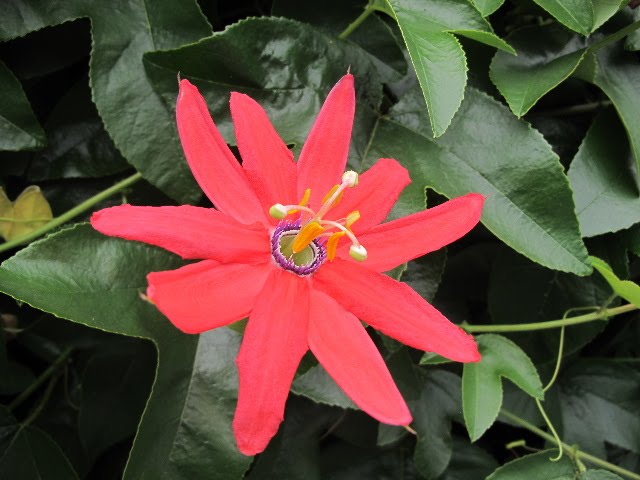
The first one I ran across was "Blue Boquet" (above) on a fence by the sidewalk. The woman who grew it was rather at her wits' end with various problems in the area and was ripping everything up (almost in spite it seemed) and moving out of town. I begged some cuttings and she was more than happy to oblige. When I went back a couple days later, it had been hacked back to a stump. Which - like in the case of Clematis "Betty Corning" and so many other things in live, just goes to show, if you want it, don't dawdle!

Right around the corner (I was tipped off by the same lady), was an enormous, robust P. ligularis, also known in Hawaii as "lilikoi," or "banana passion fruit." It's one of many introduced plants that has become a serious invasive in that state, but in California it seems to be better behaved; the "bad boy" status being reserved for the rampant P. caerulea. I took several cuttings from this one as well, and noticed that it was setting abundant fruit. This is especially good news as many Passifloras need another clone to fruit, but this one is evidently self-fertile. I wish I had a reason to be in Berkeley again a couple months hence!

There was one large pink vine right down the street from my friend's house that I believe is a selection of P. manicata called "Coral Sea." It's quite common in the area. One thing I like about many of the tubular-flowerd Passifloras is that although they are robust (to put it mildly), they don't seem to throw up suckers everywhere like some of the others.

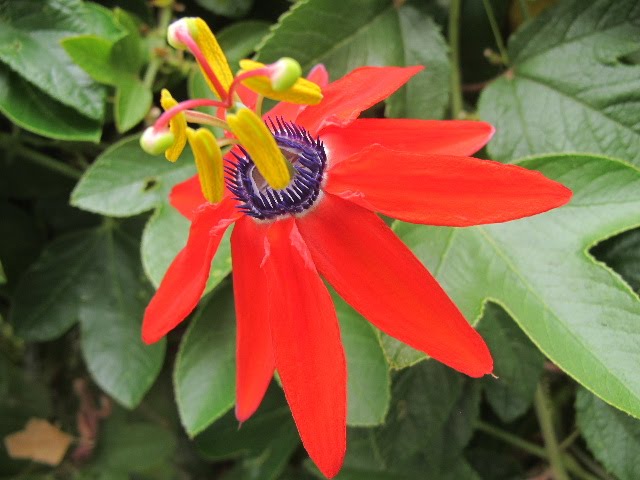
One day while heading over to a friends house down a street I'd walked several times, I saw a large fence covered with two different Passifloras that I'd missed before. Evidently the day I'd passed by it had unexpectedly gotten warm and all the flowers had closed and I hadn't noticed them from across the street. They were also quite beautiful. The brilliant red Passifloras are rather a mystery to me but I think it *might* be "Cordilia," a P. vitifolia cross. Elsewhere I took starts from another variety (but had no camera then) with less reflexed petals

On the same fence was this other very nice deep coral pink variety as well. Another P. manicata hybrid perhaps?


Normally I like to ask before taking a start of any plant but when th vine covers 10 square meters of fence space, I figure only a truly greedy or completely anal retentive person would object! And anything that crawls out onto the sidewalk is fair game as far as I'm concerned. If anyone knows for sure what these varieties are, do let me know.

As for propagation, Passifloras are generally pretty trouble-free. I've rooted them in a glass of water, but perlite or a mixture of perlite and sand is generally better. My way is to cut the stems between every other node, resulting in two-node lengths. They don't root at the nodes so it's not important that a node be in the rooting medium, but it is important that you have at least one node to sprout, two seems a safer bet. As Passifloras keep growing throughout the season, take a long cutting, which will give you a variety of ages. The general rule applies, try and get growth which is hardening off but not completely woody, and also avoid too-new growth which crushes easily between your fingers. Cut off any flower buds. I generally cut off all the leaves as well, as they only cause water loss if you have to hold them in a vase for a time before sticking the cuttings; and especially any damaged leaves (as when you've packed them in a bag and left them in a suitcase for 36 hours) will likely rot in the rooting chamber anyway. I generally get roots with no rooting hormone but a mild one won't hurt. For an easy homemade setup, I take a large commercial water bottle and cut it almost all around. I then ut about 4 inches of perlite in the bottom and wet it, but there should not be water pooled in the bottom. I close the top after sticking my cuttings, but leave the cap off the top so there is some air circulation (the cut edge also offers some ventilation) and then put it in a bright area but out of direct sunlight; even with the top open it could get dangerously hot if it got direct sun. The cuttings can take from 1 to several weeks to root, so be patient. You'll know when they have taken as you'll see vigorous new growth; but they may grow even before rooting as Passifloras seem have boundless energy.

If you live in an area where your plants can grow outdoors year-round, you can plant them directly into the soil, but keep in mind that they can be rampant, and if there is any P. caerulea or incarnata in the mix, they'll likely sucker as well. They're not as bad as kudzu, but a happy passiflora will gleefully cover whatever support it finds, and when that is full, it will find a new one. But they're forgiving and you can generally prune them back pretty severely without serious consequence.

Next - the other plants besides Passifloras!

Monday, July 12, 2010

Pumpkin or Squash? (Or Marrow? Or Courgette? or Zucchini?) Cucurbitacious Linguistics!

In web sites and other writing I constantly come across questions about whether something is a "squash or a pumpkin," or references to "true pumpkins" but with little useful information to back up the lingo. So I thought I'd take a moment to clear up some of the confusion about the many different words we use to refer to all these plants.

So what's the difference between a squash and a pumpkin? Botanically, absolutely none. Huh?

There are four species of the genus Cucurbita that we commonly refer to as pumpkins and squash (Brits, we'll get to you in a moment): C. pepo, C. maxima, C. moschata and C. argyrosperma. The first two are incredibly diverse in shape, color and texture while the third tends to have bottle-shaped fruits, usually striped, with a slightly bulbous top and swollen lower portion. Think of a grossly overweight bowling pin.

The confusion comes from the fact that all these plants come from the New World, and so English originally had no word for them. The American Indians on the other hand were very familiar with them and had as many words for them as they did languages. The first Native Americans that the early English settlers came into contact with were Algonquins, who called them askutasquash. According to the Online Etymological Dictionary, means "green things that may be eaten raw." The last part, =asquash, is the "edibles" part of the word, and the English shortened it to "squash." Which I suppose to an Algonquian speaker would sound like"dibles."

To the likely dismay of the Algonquins, the English stayed in the New World, and the Algonquian word fragment stuck, so Americans use the word "squash." However, the squash did not stay in the New World; it traveled back to the Old World, and to England among other places. And not having many Algonquins around to help them out, the inhabitants of Merrie Olde England had to find another word. So they likened the strange new food to something they did know, the "pumpion," which was an old word for a melon that they got from the French, who called them pompon. It eventually morphed (probably with or influenced by the diminutive/endearing ending -kin) into "pumpkin." And as more English came to America, now familiar with at least one variety of squash, they added their own new word to the mix. Most likely they had a round, orange variety, because in the US, the only thing that distinguishes what is called a pumpkin is a basically round shape, usually with vertical grooves, and an orange color. Never mind that there are white and green ones around too. These orange round(ish) pumpkins can be either C. pepo (mostly) or C. maxima (especially the giant pumpkins). For the rest of them, which were probably still less familiar to the newly arriving English, the term "squash" remained in use. This is not the case in England today, where "pumpkin" refers to a much broader range.

So what about "winter squash" and "summer squash?" Surely there must be some botanical distinction there?

Only sort of. C. pepo is a remarkably diverse species. Pretty much everything we call "summer squash," the generic term for squash that are picked while immature and includes what we call zucchini (Do we want to go there? We will.), yellow crookneck, etc., are varieties of C. pepo. But so are the orange pumpkins. And so are the vast majority of the decorative gourds, which are nothing more than pretty - but tasteless or bitter - varieties C. pepo. (The bottle/dipper gourds are of another genus altogether, Lageneria, and are old-world plants. Some of their fruits are also eaten immature; when mature they are incredibly bitter.)

Basically, the plants we call "winter squash" are the ones, regardless of species, which we allow to ripen and harden off, and which are more or less storable. Though out of the three species, C. pepo is the least storable, which is why you have to eat acorns and delicatas early, while you can keep a butternut or a hubbard around for months or even a year or more. The "summer squash" then, are simply varieties that we eat during the summer, while they're still immature. Some squash varieties can be eaten both ways, by the way.

When the members of the genus Cucurbita traveled to Europe, they didn't all go the same way. Some came directly to England, while others went through France. The French used the word courge for squash, and the immature ones were referred to as courgettes, which is what the English call them today. Only they also call them - or at least the variety C. pepo fastigata - "vegetable marrows." Which is just silly, but there is probably a perfectly logical explanation for it. Does anybody know?

Meanwhile, a similar variety that was now being grown (or had developed) in Italy returned to America with Italian immigrants. They called the squashes zucca (except for some which they called cucuzzi but just never mind) and their word for the immature ones was zucchini. These are the courgettes of England. The marrows are not as well known in the US, but they should be - though the English tend to grow them larger, they are at their best when about 8 inches long and light green, and are more flavorful than zucchini.

So in the end, the only clear distinction between all these varieties is their actual species. So now that I've confused you completely, here's a selection of some of the better known varieties of squash/courgette/pumpkin/marrow/zucchini according to species:

C. pepo
Most of these tend to have some fiber when mature, so more are eaten immature.

Most jack-o-lantern pumpkins
Acorn squash
Delicata squash
Most ornamental gourds
Zucchini
Pattypan
Spaghetti squash

C. maxima
Some of the best winter squash, many with smooth, dry flesh and little or no fiber. They tend to make better pumpkin pie than most of the ones we call "pumpkins;" commercial pumpkin pie filling is actually made from Gray Hubbard.

Hubbard squash
Giant pumpkins
Buttercup squash
Pink banana squash
Gray banana squash
Jarrahdale squash
Kabocha squash
Winter keeper squash
Cinderella

C. moschata
This includes some eminently edible squashes as well as several watery, stringy varieties.

Butternut squash
Futtsu squash
Long Island Cheese pumpkin
Winter crookneck, Pennsylvania Dutch crookneck
Seminole pumpkin

C. argyrosperma
These are not very popular in the US due to their stringy texture but some are not so bad if you run the cooked flesh through a food mill.

Cushaws